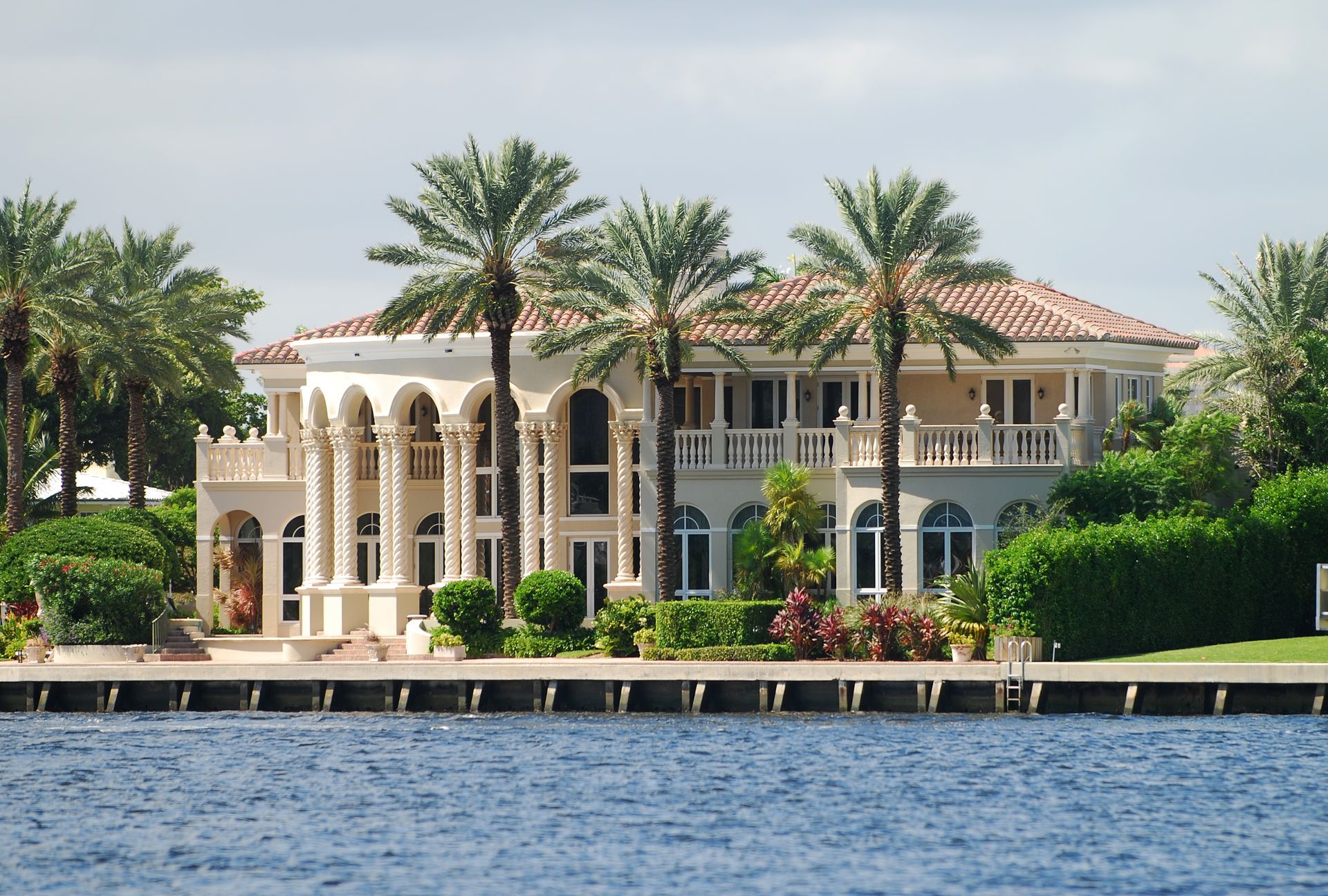
Is Waterfront Property a Good Investment in Florida?
Key Points
- Florida waterfront properties historically appreciate 3-5% annually, often outpacing inland properties during strong market cycles
- Vacation rental income from luxury waterfront homes can generate $50,000 to $300,000+ annually in prime tourist markets
- Insurance costs for waterfront properties average $20,000 to $50,000 yearly, significantly impacting net investment returns
- Climate risks including hurricanes and sea level rise create uncertainty that investors must factor into long-term calculations
- Limited waterfront inventory and high demand support strong resale values in established luxury coastal markets
- Successful waterfront investment requires higher capital reserves than inland properties due to maintenance and potential storm damage costs
- Working with experienced luxury waterfront specialists helps identify properties with the strongest investment potential
The Waterfront Investment Question Everyone's Asking
You've been scrolling through oceanfront listings, imagining sunrise coffee on your private dock and evening cocktails watching boats glide past. But then reality kicks in. That oceanfront estate costs three times what a comparable inland home would run. The insurance quotes make your eyes water. Your financial advisor keeps mentioning something about diversification.
So here's the million-dollar question (sometimes literally): is waterfront property actually a good investment in Florida, or are you letting lifestyle dreams cloud financial judgment?
The honest answer? It depends on your investment goals, risk tolerance, timeline, and how you define "good investment." Waterfront property can absolutely build significant wealth for the right investor in the right circumstances. It can also become a financial anchor dragging down your portfolio if you don't go in with eyes wide open.
Let's break down the real numbers, the actual risks, and the investment potential of Florida waterfront real estate so you can make an informed decision based on facts rather than fantasy.
The Appreciation Story: What the Data Actually Shows
Florida waterfront properties have historically appreciated at rates that make inland real estate look downright boring. But let's dig into what the numbers really tell us.
Long-Term Historical Performance
Over the past 20 years, prime Florida waterfront properties have appreciated at average annual rates of 3% to 5%, with exceptional properties in top-tier markets sometimes reaching 6% to 8% annually. During strong market cycles, waterfront appreciation can spike dramatically higher.
Here's what makes these numbers interesting. Waterfront properties typically outperform comparable inland homes during bull markets. When real estate values are rising, waterfront premiums expand. That oceanfront home that costs twice the inland comparable might cost 2.5 times as much five years later.
The flip side? Waterfront properties can also decline more sharply during market corrections. The 2008-2012 downturn hit luxury waterfront particularly hard in some Florida markets, with properties losing 30% to 50% of peak values. However, most quality waterfront properties in desirable locations eventually recovered and exceeded previous highs.
Markets like St. Augustine, Palm Coast, and Ponte Vedra have shown particularly strong waterfront appreciation over the past decade as buyers increasingly value coastal lifestyle and limited inventory supports pricing.
Intracoastal Waterway Properties
The Intracoastal Waterway offers a compelling middle ground between ocean exposure and protected waters. These properties provide deep water access suitable for serious boating while offering more protection from storms and surf than direct oceanfront.
Intracoastal properties typically feature private docks that can accommodate significant vessels, calmer waters perfect for paddleboarding and kayaking, and still deliver beautiful water views without the full force of ocean exposure. The boating lifestyle thrives here, with easy access to both inland waterways and ocean inlets.
Properties along the Intracoastal in areas likePonte Vedra and select Palm Coast locations offer the nautical lifestyle many luxury buyers crave. You can keep your yacht at your private dock and cruise to restaurants, social events, or out to the ocean for offshore fishing.
The trade-off? You sacrifice the drama of crashing waves and that unique energy of living on the ocean's edge. Views across the Intracoastal are beautiful but different from endless ocean horizons. Still, for serious boaters and those who value protected deep water access, Intracoastal properties often represent the ideal waterfront investment.
Location-Specific Performance
Not all Florida waterfront appreciates equally. The micro-market matters enormously.
Miami waterfront, especially in premium neighborhoods like Miami Beach, Coral Gables, and Key Biscayne, has delivered some of the strongest appreciation in the state. International buyer demand, limited inventory, and global city status support valuations. Properties in the $5 million to $50 million range have appreciated substantially over the past decade.
Tampa and St. Petersburg waterfront has seen accelerating appreciation as the region grows and attracts new residents. The combination of urban amenities with water access creates strong demand. Values have climbed steadily, though the market remains more accessible than Miami.
Palm Coast and Flagler County oceanfront offers a different appreciation story. These markets provide better value entry points, and while appreciation rates may run slightly lower than Miami's hottest neighborhoods, the lower starting prices and growing population support steady value growth.
The Orlando area's lakefront luxury properties appreciate based more on overall Central Florida growth than coastal dynamics, but exceptional lakefront estates in gated communities have shown solid returns as the region continues expanding
The Scarcity Factor
Here's what makes waterfront appreciation different from inland property. They literally aren't making any more oceanfront land. The supply is fixed, and in many desirable markets, it's shrinking due to environmental protections and development restrictions.
This scarcity creates a fundamental supply-demand imbalance that supports long-term value appreciation. As Florida's population continues growing and wealth concentrates among high-net-worth buyers seeking waterfront lifestyle, the limited inventory of prime waterfront property faces increasing demand pressure.
For investment purposes, this scarcity factor provides a floor under values that inland properties don't enjoy. Barring major market disruptions or environmental catastrophes, quality waterfront in desirable locations should maintain and grow value over long time horizons.
Rental Income Potential: The Numbers That Make Investors Pay Attention
If you're evaluating waterfront property purely as an investment rather than lifestyle purchase, rental income potential becomes crucial to the calculation.
Vacation Rental Revenue
Luxury waterfront properties in tourist-friendly markets can generate eye-popping rental income. We're talking about revenue that can cover your entire annual ownership costs and then some.
Prime oceanfront properties in markets like St. Augustine, Palm Coast beaches, or Tampa's waterfront neighborhoods can command $3,000 to $10,000+ per week during peak season. A luxury five-bedroom oceanfront estate might rent for $8,000 to $15,000 weekly during summer months and holidays.
Run the math on that. If you can rent at $10,000 per week for 20 weeks annually (accounting for turnover, maintenance periods, and slower seasons), you're looking at $200,000 in gross rental income. Even after management fees (typically 20-30%), cleaning, maintenance, and vacancy, net rental income could reach $100,000 to $140,000 annually.
That kind of income transforms the investment equation. Suddenly that $3 million purchase price starts looking more reasonable when it's generating 3-5% cash-on-cash returns before appreciation.
Miami waterfront rentals can command even higher rates, with luxury oceanfront properties sometimes renting for $15,000 to $30,000+ weekly during peak season. However, competition is fiercer and management costs run higher in that market.
Long-Term Rental Strategy
Not every waterfront market allows short-term vacation rentals. Some communities restrict rentals to 30 days or longer, and some luxury neighborhoods prohibit rentals entirely.
Long-term rental of waterfront properties generates lower yields than vacation rentals but provides more stable income with less management intensity. A $2 million waterfront home might rent long-term for $6,000 to $12,000 monthly depending on location and property features.
Annual gross rental income of $72,000 to $144,000 represents 3.6% to 7.2% gross yield on a $2 million property. After property management, maintenance, insurance, and other costs, net yields typically run 2% to 4% annually. Not spectacular compared to vacation rental potential, but respectable for luxury real estate investment.
The advantage of long-term rental is predictability and lower management burden. You're not constantly turning properties, coordinating cleanings, or managing guest issues. For investors who want income without intensive involvement, long-term rental of waterfront properties in strong markets can work well.
The Regulation Reality Check
Before banking on rental income, verify local regulations allow your intended strategy. Many luxury waterfront communities have moved to restrict or prohibit short-term vacation rentals in recent years.
HOA covenants might prohibit any rentals or restrict rental duration. Municipal ordinances increasingly regulate vacation rentals with licensing requirements, occupancy limits, and noise restrictions. Some areas ban short-term rentals entirely in residential zones.
Do this research before purchasing. That waterfront property might look like a cash cow, but if local regulations prohibit your rental strategy, your investment thesis collapses. Our team at EAZ Realty helps investors understand local rental regulations before making offers to avoid costly mistakes.
The Cost Reality: What Eats Into Your Returns
Now let's talk about the expenses that separate waterfront investment from typical real estate. These costs are real, substantial, and often underestimated by first-time waterfront investors.
Insurance: The Big Expense Everyone Underestimates
We touched on this in our complete guide to buying luxury waterfront property, but it bears repeating because insurance absolutely crushes some waterfront investment returns.
You're looking at three separate insurance policies for comprehensive coverage. Flood insurance runs $3,000 to $15,000+ annually depending on elevation and flood zone. Windstorm coverage costs $5,000 to $25,000 yearly for coastal properties. Standard homeowners insurance adds another $5,000 to $20,000 based on property value.
Total annual insurance costs of $20,000 to $50,000 are common for luxury waterfront properties. Exceptional oceanfront estates sometimes exceed $75,000 annually in insurance costs alone.
Compare that to a similar value inland property that might pay $8,000 to $15,000 total for insurance. The waterfront premium is real and recurring. On a $2 million property generating $100,000 gross rental income, insurance alone might consume 20-40% of gross revenue before you've paid a single dollar for maintenance, management, or mortgage.
Factor this into your investment calculations from day one. What looks like a 5% gross rental yield might become a 2-3% net yield after insurance costs.
Maintenance and Upkeep
Waterfront properties require more maintenance than inland homes, period. Salt air corrodes metal, UV exposure degrades materials faster, and weather exposure takes constant toll on structures.
Budget 1.5% to 2.5% of property value annually for maintenance on waterfront properties versus the typical 1% for inland homes. On a $2 million waterfront property, that's $30,000 to $50,000 yearly for routine maintenance, repairs, and upkeep.
Major capital expenditures hit harder at waterfront. Seawall replacement can cost $100,000 to $500,000 depending on length and construction. Dock rebuilding runs $50,000 to $200,000+. Hurricane damage repairs can devastate even well-insured properties due to deductibles and coverage limits.
Successful waterfront investors maintain substantial cash reserves, typically 10-20% of property value, for unexpected repairs and storm damage. This capital sits idle earning minimal returns instead of being deployed in higher-yielding investments
Property Management and Operations
If you're buying waterfront property for rental income, professional property management becomes essential unless you live nearby and enjoy hands-on management.
Vacation rental management typically costs 20-30% of gross rental income. Long-term rental management runs 8-12% of monthly rent. These percentages come off the top before you see a penny.
Additionally, vacation rentals incur higher turnover costs. Cleaning between guests, restocking supplies, coordinating maintenance, and managing guest issues all add operational expenses beyond basic management fees.
For out-of-state investors or those treating waterfront property primarily as investment rather than personal use, these management costs are unavoidable and must be factored into return calculations.
The Risk Factors Investors Must Consider
Let's address the elephants on the beach. Waterfront property investment carries specific risks that inland real estate doesn't face.
Hurricane and Storm Risk
Florida's hurricane exposure is real and increasing. Climate scientists predict more intense storms even if frequency doesn't increase substantially. One major hurricane making direct landfall on your waterfront property can cause catastrophic damage.
Insurance helps but doesn't eliminate risk. High deductibles (often 2-5% of insured value), coverage limits, and potential for disputes over covered damage all create exposure. A $2 million property might carry a $40,000 to $100,000 hurricane deductible, meaning you're self-insuring substantial damage.
Beyond physical damage, hurricanes disrupt rental income for vacation rental properties. Post-storm cleanup, repairs, and negative publicity can tank bookings for months or even years in severely affected areas.
Conservative waterfront investors factor hurricane risk into return expectations, essentially pricing in a major storm event every 10-15 years and planning capital reserves accordingly.
Climate Change and Sea Level Rise
The 30-year investment outlook for waterfront property must account for rising sea levels and changing climate patterns. Scientists project 1-3 feet of sea level rise by 2100, with some models suggesting more dramatic increases.
Properties at higher elevations face less immediate risk, but low-lying waterfront could experience more frequent flooding, increased insurance costs, and eventual uninhabitability without major coastal protection investments.
This uncertainty affects resale values. Will buyers in 2045 pay premium prices for properties facing regular flooding? Will insurance even remain available and affordable for vulnerable coastal properties?
These aren't hypothetical concerns for waterfront investors with 20-30 year holding periods. They're real risks that must factor into investment decisions. Properties with higher elevation, engineered coastal protection, and locations less vulnerable to storm surge offer better long-term investment security.
Insurance Availability and Affordability
Florida's coastal insurance market faces ongoing challenges. Some carriers have reduced coastal exposure or exited the market entirely. Others have dramatically increased premiums or reduced coverage offerings.
This trend creates uncertainty for waterfront investors. Will insurance remain available and affordable 10 or 20 years from now? If carriers continue retreating from coastal markets, will Citizens Property Insurance (Florida's insurer of last resort) provide adequate coverage at reasonable rates?
These questions don't have clear answers, which creates investment risk. A property that's insurable today at $35,000 annually might cost $60,000 or become difficult to insure at any price in future markets.
Liquidity Considerations
Luxury waterfront properties represent illiquid investments. Unlike stocks you can sell in seconds, waterfront real estate can take months or years to sell, especially in softer markets or for exceptionally high-end properties.
The buyer pool for multi-million dollar waterfront estates is limited. Economic downturns, local market corrections, or increased hurricane activity can shrink that pool further, leaving you unable to exit the investment when desired.
For investors who might need to liquidate quickly due to financial changes, waterfront property poses liquidity risk that must be considered against potential returns.
Who Should (and Shouldn't) Invest in Waterfront Property
After reviewing appreciation potential, rental income, costs, and risks, let's get specific about who makes a good waterfront property investor.
Ideal Waterfront Property Investors
Waterfront property investment makes sense for buyers who fit this profile:
High net worth individuals who can absorb potential losses without financial hardship. If a hurricane causes $200,000 in uncovered damage or insurance costs spike unexpectedly, you can handle it without stress.
Long-term hold strategy of 10+ years allowing time to ride out market cycles and weather (literally) the storms. You're not counting on quick flips or short-term appreciation.
Substantial cash reserves beyond the purchase price, ideally 20-30% of property value maintained for unexpected expenses, repairs, and potential storm damage.
Personal use combined with investment returns, meaning you value the waterfront lifestyle alongside financial returns. The property serves dual purposes, making the total value proposition more attractive than pure investment analysis suggests.
Understanding and acceptance of climate risks with properties selected for relative resilience to sea level rise and storm exposure.
Experience with real estate investment and understanding that waterfront properties require more sophisticated analysis than typical rental properties.
Who Should Avoid Waterfront Investment
Waterfront property probably isn't right if you:
Need consistent, predictable cash flow without possibility of disruption from storms, insurance increases, or regulatory changes affecting rental income.
Cannot afford to self-insure substantial deductibles or maintain large cash reserves for unexpected expenses and repairs.
Are counting on quick appreciation for investment success rather than viewing waterfront as long-term hold. Waterfront can be illiquid and subject to market cycles.
Don't fully understand waterfront-specific risks including hurricanes, flooding, climate change impacts, and insurance market uncertainty.
View this purely as financial investment without personal use or lifestyle value. Pure investment analysis often shows better risk-adjusted returns in other real estate sectors or investment classes.
Cannot tolerate the possibility of total loss. Despite insurance, some catastrophic scenarios could result in properties becoming uninhabitable or uninsurable.
Maximizing Waterfront Investment Returns
Purchasing luxury waterfront real estate involves additional steps beyond typical home buying. Here's what to expect.
Finding Off-Market Properties
The best luxury waterfront properties often sell before hitting public MLS listings. Serious buyers work with well-connected agents who maintain relationships with waterfront property owners and other luxury specialists.
AtEAZ Realty, our network spans Florida's premier waterfront markets. We know which properties might come available before public listings and can arrange private showings of homes not yet on market.
This off-market advantage is especially valuable in limited inventory markets like historic St. Augustine waterfront or prime Palm Coast oceanfront where available properties are scarce.
Property Inspection Specifics
Standard home inspections don't adequately address waterfront-specific issues. Specialized inspections should include:
Marine surveyor evaluation of docks, seawalls, boat lifts, and submerged structures identifies problems invisible from shore. These professionals understand tides, erosion, and marine construction in ways general home inspectors don't.
Environmental assessments screen for contamination, especially important if the property includes old fuel storage, commercial maritime uses, or potential exposure to industrial runoff.
Elevation certificates confirm the structure's height relative to base flood elevation, which directly impacts flood insurance costs. Don't rely on seller-provided certificates without verification.
Structural engineering review of hurricane protection systems, reinforcement, and coastal construction ensures the home can withstand the forces it will eventually face.
These specialized inspections cost more than standard home inspections but provide crucial information for such significant investments.
Negotiation and Closing
Luxury waterfront transactions often involve complex negotiations beyond price.
Dock and marine equipment can represent hundreds of thousands in value. Negotiate clearly regarding which equipment conveys with the sale versus what sellers retain.
Boat lifts, vessels, watercraft, and marine accessories may or may not be included. Get everything in writing with specific descriptions and conditions.
Hurricane protection equipment including generators, storm shutters, and backup systems should be addressed explicitly in purchase agreements.
Coastal property insurance can be difficult to obtain. Some buyers negotiate for sellers to transfer existing policies or provide insurance contacts and history.
Closing timeline may need extension to accommodate specialized inspections, permit research, or survey completion. Luxury waterfront transactions shouldn't be rushed.
Environmental contingencies protect buyers if inspections reveal contamination, protected species habitat, or regulatory violations that affect property use.
Working with real estate attorneys and agents experienced in luxury waterfront transactions ensures you're protected through every step of the process.
Lifestyle Considerations Beyond the Property
For those who decide waterfront property investment makes sense, certain strategies improve return potential while managing risks.
Property Selection Strategy
Choose properties with investment-grade characteristics. Higher elevation properties face lower flood insurance costs and better long-term climate resilience. Established luxury markets with strong historic appreciation and limited inventory provide better value support than emerging or oversupplied markets.
Properties with proven rental demand and income history reduce income uncertainty. Strong rental comps in the neighborhood indicate sustainable vacation rental or long-term rental markets.
Avoid overbuilding for the market. Exceptional properties can struggle to find buyers and command appropriate premiums in markets that don't support the very highest price points. Better to be a top property in a strong market than an average property in an exceptional market.
Our team at EAZ Realty specializes in identifying waterfront properties with strong investment fundamentals across Florida's luxury coastal markets. We analyze rental potential, appreciation history, climate vulnerability, and market positioning to identify properties offering the best risk-adjusted returns.
Optimize for Rental Income
If rental income drives your investment thesis, design and manage accordingly. Professional interior design maximizing photos and online presentation significantly impacts booking rates for vacation rentals. Invest in photography, virtual tours, and compelling listing descriptions.
Amenities that drive rental premium include heated pools and spas, outdoor kitchens and entertainment areas, high-end electronics and smart home features, beach equipment and water toys, and luxury finishes throughout.
Professional property management by firms specializing in luxury vacation rentals ensures maximum occupancy, proper maintenance, and guest satisfaction leading to positive reviews and repeat bookings.
Dynamic pricing software optimizes rental rates based on demand, seasonality, and local events. Vacation rental income can vary 30-50% based on effective pricing strategy.
Risk Management Approach
Protect your investment with comprehensive insurance even if it seems expensive. The right coverage prevents financial catastrophe. Consider umbrella policies providing additional liability protection beyond standard coverage.
Maintain capital reserves as mentioned, ideally 20-30% of property value in liquid accounts. This allows you to handle deductibles, temporary rental income loss, and unexpected repairs without financial stress.
Regular preventive maintenance reduces long-term costs and protects property value. Annual inspections of seawalls, docks, roof, HVAC, and other critical systems identify problems before they become expensive disasters.
Diversification across multiple properties or property types reduces concentration risk. Don't have 100% of your real estate investment in a single waterfront property vulnerable to the same hurricane strike.
Exit Strategy Planning
Smart investors buy with eventual sale in mind. Maintain detailed records of improvements, repairs, and rental income for future buyers. Well-documented income history supports valuation and helps buyers secure financing.
Time your sale strategically if possible. Spring and summer typically see stronger waterfront demand than fall and winter. Strong economic conditions and low interest rate environments create better selling conditions than recessions and high rates.
Consider 1031 exchanges allowing you to defer capital gains taxes by rolling proceeds into another investment property. This strategy can significantly improve after-tax returns on waterfront investments.
The Verdict: Is Waterfront Property a Good Investment?
So after all this analysis, what's the bottom line?
Waterfront property can absolutely be a good investment in Florida for the right buyer with appropriate expectations, risk tolerance, and financial capacity. The combination of limited supply, strong demand, lifestyle appeal, and rental income potential creates genuine investment opportunity.
However, waterfront investment isn't for everyone and isn't guaranteed to outperform other investment options. The higher costs, increased risks, illiquidity, and management complexity mean waterfront investments require more sophisticated analysis than typical real estate.
The best waterfront investments share these characteristics. They're in established luxury markets with strong historic appreciation like Palm Coast, St. Augustine, Miami, or Tampa waterfront communities. Properties feature characteristics supporting long-term value including elevation, quality construction, desirable locations, and proven rental demand if income is part of the strategy.
Buyers approach waterfront investment with realistic expectations about costs, maintenance, and risks rather than purely optimistic appreciation assumptions. They maintain adequate capital reserves and insurance to weather storms both literal and financial. Most importantly, successful waterfront investors value the lifestyle alongside financial returns, meaning even if pure investment returns are just okay, the personal enjoyment justifies the investment.
If you're seriously considering waterfront property investment in Florida, start with education. Our comprehensive guide to buying luxury waterfront property covers everything from property types to insurance costs to finding the right location. Combine that knowledge with professional guidance from experienced waterfront specialists who understand local markets, investment dynamics, and risk factors.
Ready to explore waterfront investment opportunities in Florida? Let's discuss your investment goals, risk tolerance, and timeline to identify properties offering the strongest potential returns. Our team analyzes waterfront markets daily and can show you properties with genuine investment merit versus those that look appealing but don't deliver solid returns
Contact EAZ Realty today to discuss waterfront property investment:
160 Cypress Point Pkwy, Suite B104
Palm Coast, FL 32164
(386) 585-4833
Visit our luxury waterfront properties page or contact us to schedule consultations about waterfront investment opportunities. Browse our blog for more insights on Florida luxury real estate investing.
FAQs About Waterfront Property Investment in Florida
What is the average ROI on waterfront property in Florida?
Waterfront property ROI in Florida varies significantly based on location, property type, and investment strategy, but realistic expectations range from 5% to 12% total annual returns combining appreciation and rental income. Pure appreciation typically runs 3-5% annually in established markets, though exceptional properties and strong market cycles can deliver 6-8% or higher. Vacation rental income can add another 3-7% net annual return after expenses in markets allowing short-term rentals. However, these figures don't account for the higher risks waterfront properties face from hurricanes, climate change, and insurance costs. Conservative investors should model 4-6% total annual returns and view anything higher as upside rather than expectation.
Do waterfront properties appreciate faster than inland properties?
Yes, waterfront properties historically appreciate faster than comparable inland properties during growth cycles, often by 1-3 percentage points annually. The scarcity of waterfront land, limited inventory, and high demand from affluent buyers create appreciation pressure that inland properties don't experience. During strong real estate markets, waterfront premiums expand meaning the gap between waterfront and inland pricing widens. However, waterfront properties can also decline more sharply during market corrections. The 2008-2012 downturn saw some luxury waterfront markets lose 30-50% of peak values before recovering. Long-term appreciation trends favor waterfront, but short-term volatility runs higher than inland properties.
Can I write off waterfront property expenses as investment property?
Yes, if you treat your waterfront property as investment or rental property rather than personal residence, most ownership expenses become tax deductible. Deductible expenses typically include mortgage interest, property taxes, insurance premiums (flood, windstorm, homeowners), property management fees, maintenance and repairs, HOA fees, utilities if you pay them, depreciation of the property structure, and travel expenses related to property management. However, personal use limitations apply. If you use the property yourself for more than 14 days or 10% of rental days (whichever is greater), it becomes a mixed-use property with prorated deductions. Tax law is complex and changes frequently, so work with a CPA experienced in vacation rental and investment property taxation to maximize legitimate deductions while remaining compliant.
Is waterfront property hard to sell?
Luxury waterfront property can be harder to sell than typical residential real estate due to the limited buyer pool and higher price points. Properties priced above $2-3 million face significantly smaller buyer pools than properties under $1 million. Exceptional waterfront estates above $5-10 million might take 12-24 months to sell even in strong markets simply because few buyers exist at those price points. Market conditions dramatically affect salability with strong economies, low interest rates, and confident buyers creating faster sales, while recessions, high rates, and economic uncertainty can stall luxury waterfront markets for extended periods. Location matters enormously, as established luxury markets like Miami, Tampa, and St. Augustine waterfront sell faster than emerging or oversupplied markets. Plan for potential holding periods of 6-18 months even in good markets.
What happens to waterfront property values after a hurricane?
Hurricane impacts on waterfront property values vary dramatically based on storm severity, property damage, and market psychology. Direct hits causing catastrophic damage can depress values 10-30% or more in severely affected areas as buyers fear future storms and insurance becomes expensive or unavailable. However, properties that weathered storms well or suffered minimal damage sometimes see value increases as they've proven resilience. Markets typically recover within 1-3 years after major storms as memories fade, properties are rebuilt, and demand returns. The 2004-2005 Florida hurricane season initially depressed coastal values, but most markets fully recovered within 3-4 years. Properties with superior construction, higher elevation, and proven storm resistance maintain value better than vulnerable properties in same markets.
Should I buy waterfront property if I'm worried about climate change?
Climate change concerns warrant serious consideration for waterfront property investment, but shouldn't automatically eliminate waterfront from your investment strategy. Focus on properties with climate-resilient characteristics including elevation at least 2-3 feet above base flood elevation, locations protected from direct storm surge and wave action, newer construction built to current hurricane codes and elevation standards, and areas with lower long-term sea level rise vulnerability. Avoid low-lying properties, areas with frequent flooding history, locations lacking natural or engineered coastal protection, and markets where insurance is already becoming difficult to obtain. Climate change represents real risk for waterfront property, especially on 20-30 year investment timelines, but selecting resilient properties and maintaining adequate insurance helps manage this risk. If climate concerns cause significant anxiety, consider lakefront or river properties at higher elevations rather than oceanfront locations.
Can I get a mortgage on a luxury waterfront investment property?
Yes, mortgages are available for luxury waterfront investment properties, though lending requirements are stricter than primary residence mortgages. Expect lenders to require 20-30% down payment for investment properties versus 10-20% for primary residences, higher interest rates (typically 0.5-1% above primary residence rates), stronger credit scores (usually 700+ minimum, prefer 740+), and substantial cash reserves (often 6-12 months of expenses). Lenders scrutinize rental income potential more carefully for luxury properties and may discount projected rental income in their debt-to-income calculations. Some portfolio lenders specialize in luxury investment property financing and offer more flexibility than conventional lenders. Working with mortgage brokers experienced in luxury waterfront financing helps identify the best lending options for your situation.
What are the best Florida waterfront markets for investment right now?
The strongest Florida waterfront investment markets currently combine appreciation potential, rental income opportunity, climate resilience, and buyer demand. St. Augustine offers historic charm with growing luxury market, strong vacation rental demand, and relatively affordable entry points compared to South Florida. Palm Coast provides excellent value with oceanfront properties still accessible under $3 million while population growth and development support appreciation. Tampa and St. Petersburg waterfront benefits from urban growth, job creation, and lifestyle appeal attracting relocating professionals and retirees. Ponte Vedra delivers luxury golf course waterfront communities with wealthy buyer demographics and proven value stability. Miami remains the premium market with international buyer demand and luxury cache, though entry costs run highest. Each market offers different investment profiles, so the "best" market depends on your budget, risk tolerance, and whether you prioritize appreciation, rental income, or personal use alongside investment returns.
FAQs About EAZ Realty
Does EAZ Realty help investors analyze waterfront property returns?
Yes, investment analysis is a core part of our waterfront property service for investor clients. We provide comprehensive market analysis showing comparable sales and appreciation trends, rental income data from similar properties in the area, detailed cost breakdowns including insurance estimates, maintenance budgets, and operating expenses, climate and flood risk assessment for specific properties, and projected cash flow models based on your intended use and financing structure. We also connect investors with insurance specialists providing accurate premium quotes, property managers who can estimate rental income potential, and CPAs who can model tax implications. Our goal is ensuring you have all the data needed to make informed investment decisions rather than emotional purchases.
Can EAZ Realty help me find waterfront properties with strong rental income potential?
Absolutely. We specialize in identifying waterfront properties that perform well as vacation rentals or long-term rental investments. Our analysis includes reviewing local rental regulations to ensure short-term rentals are permitted, researching comparable rental rates in specific neighborhoods, evaluating property features that command rental premiums, assessing location appeal to vacationers or long-term renters, and connecting you with property management companies providing income estimates. We also help you understand which locations offer the best rental demand, which property types rent most successfully, and what amenities maximize rental income. Many of our investor clients specifically seek waterfront properties generating strong rental returns, and we've developed expertise identifying these opportunities across our Florida markets.
Does EAZ Realty work with out-of-state waterfront property investors?
Yes, a significant portion of our waterfront investor clients live out of state and purchase Florida waterfront properties for investment, vacation use, or future retirement. We provide enhanced services for remote investors including virtual property tours and detailed video walkthroughs, coordination of all inspections and due diligence, referrals to local service providers (attorneys, CPAs, insurance, property management), remote closing capabilities, and ongoing property oversight after purchase if needed. We understand out-of-state investors face unique challenges and require more support than local buyers. Our multi-market Florida coverage also helps out-of-state investors compare different coastal markets to find locations matching their investment criteria and budget.
What makes EAZ Realty qualified to advise on waterfront property investment?
Our team combines extensive luxury real estate experience with specific waterfront market expertise across multiple Florida coastal markets. We've represented buyers and sellers in hundreds of waterfront transactions ranging from $500,000 lakefront properties to $20 million oceanfront estates. This experience has taught us what drives waterfront property values, which locations offer the strongest investment potential, how to evaluate rental income opportunities, and what risks investors must manage. We maintain relationships with marine surveyors, coastal engineers, waterfront insurance specialists, and luxury property managers who contribute to comprehensive investment analysis. Unlike general real estate agents who occasionally handle waterfront properties, we specialize in coastal luxury real estate and work with waterfront properties daily across Palm Coast, St. Augustine, Ponte Vedra, Jacksonville, Orlando area, Miami, Tampa, and St. Petersburg markets.
How does EAZ Realty charge for waterfront property investment consulting?
We operate on standard real estate commission structures, meaning our buyer representation services cost you nothing out of pocket. We're compensated through seller-paid commissions at closing. Our investment analysis, market research, property evaluation, and buyer consultation services are all included as part of our comprehensive buyer representation at no additional charge. We believe investors deserve the same white-glove service and expertise as lifestyle buyers, and we don't charge extra fees for the additional analysis investment purchases require. Our success depends on helping you find waterfront properties that deliver on your investment goals, so our incentives align perfectly with yours throughout the buying process.
Disclaimer: The information provided on this blog is for general informational purposes only and should not be considered professional advice. While we strive to ensure that all content is accurate and up to date, no guarantees are made regarding its completeness or reliability. Readers are encouraged to seek professional guidance specific to their situation before making any decisions based on the information provided. The author and this blog disclaim any liability for actions taken or not taken based on the content herein.